ADASS — the Association of Directors of Adult Social Services — is the membership organisation representing directors of adult social services across England. Its members lead the statutory adult social care functions of local authorities, making ADASS one of the most influential voices in the sector. As well as shaping national policy, ADASS provides sector leadership on issues including workforce, commissioning, and reform.
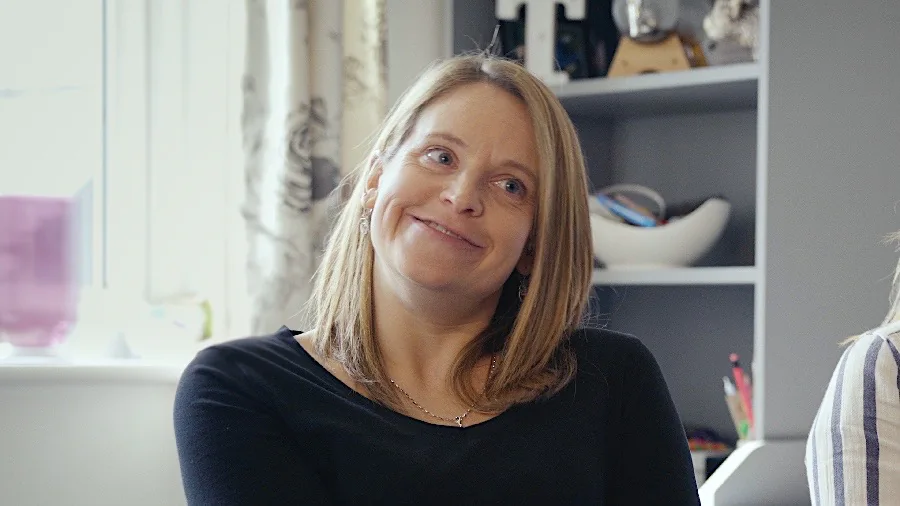
We worked with ADASS (Association of Directors of Adult Social Services) to produce a suite of films for their Care Can't Wait campaign. This is a multi-year public awareness initiative making the case for greater investment and political prioritisation of adult social care in England. The campaign needed to challenge widespread misconceptions about what social care is and who it's for, while demonstrating through real human stories how good social care enables people to live full, independent, meaningful lives.
The brief called for character-led documentary films featuring real social care beneficiaries, alongside a overall campaign film. Together, the films needed to balance emotional authenticity with dignity, urgency with hope, and personal storytelling with broader systemic messaging — all without resorting to the kind of emotional manipulation or deficit-focused framing that can undermine trust and reinforce unhelpful stereotypes.
Production took place across four separate shoots in different locations across England. In Calne, Wiltshire, we filmed with Abbie — a working mother with cerebral palsy who has built an independent career and family life through direct payments and the support of her personal assistant Dani. The shoot followed a full day in Abbie's life: morning routines at home, Abbie working with Dani's support, the school run, and family time at the park with her two daughters. The brief required sensitive handling of personal care sequences, careful choreography around the school (filmed nearby rather than on site), and a creative approach that foregrounded Abbie's agency and the easy, natural dynamic between her and Dani, rather than framing care as something done to her.
In Luton, we followed David, a 92-year-old wheelchair user in assisted living, across a day that illustrated both the best and the most frustrating aspects of the current social care system. The shoot moved between David's flat and St Augustine's Church, where he attends a community lunch. This was a simple outing that had previously been impossible due to staffing cuts at his accommodation. Filming required coordination with church leadership, the Age UK representative present on the day, and David's carers, with consent obtained on the day. The tone throughout was guided by David himself: warm, direct, and unsparing about the system's shortcomings without losing his characteristic positivity.
In Wimborne, Dorset, we filmed with Dave, whose story centred on technology-enabled care. After seven months in a mental health rehabilitation unit, Dave now lives independently and is supported by a daily home carer, a mobile fall alarm, the Brain in Hand app, and a medication reminder device. The shoot included a visit to Dorset Council's TEC Lounge in Dorchester, where Dave acted as an informed guide to the range of assistive technology available, and time on his regular walking route, a simple pleasure that now represents something far larger about what good social care makes possible.
The fourth shoot took place in Leeds city centre, where our crew spent a full day conducting vox pop interviews with members of the public. These filmed conversations — structured around both training questions and campaign reveals — were designed to surface genuine public understanding (and misunderstanding) of adult social care, then gently challenge it on camera. Capturing authentic reactions to facts like "4 in 5 of us will need adult social care in our lifetime" required a relaxed, unhurried approach and continuous movement between locations to ensure a genuinely diverse range of voices.
Across all four shoots, the ethical framework was consistent: fully informed consent before filming, participants in control throughout, no scripted or over-rehearsed content, and a commitment to showing everyone featured as a whole person rather than a case study.
The Care Can't Wait film suite forms the foundation of ADASS's public awareness campaign, with the character-led films available on the campaign website and social channels. The films have been used to open sessions in which attendees examine public perceptions of social care, and the campaign continues to grow its coalition of supporters.
